
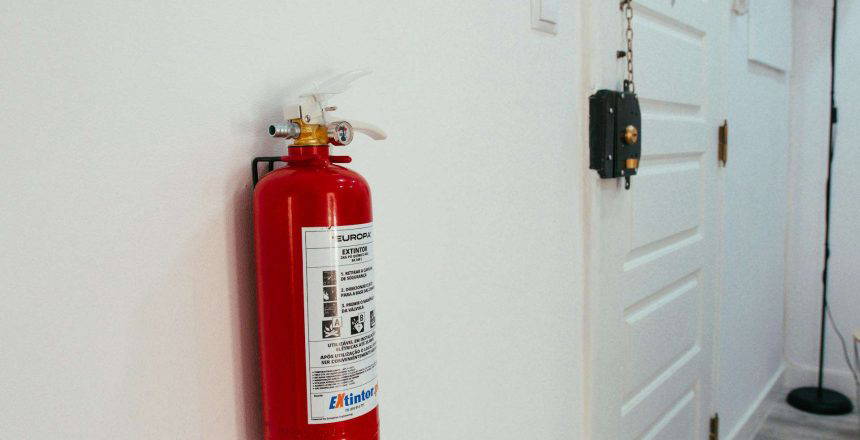
In the UK, fire extinguishers follow strict standards under BS EN 3, introduced in 1997.
All modern extinguishers have a predominantly signal red body (a bright, highly visible red) to make them easy to spot in emergencies, including in smoke-filled or low-light conditions.
The key to identifying the type and suitable fire classes is the coloured band or label at the top or on the body, usually covering at least 5% of the surface.
This colour coding system allows quick identification without needing to read detailed labels in a crisis. Using the wrong extinguisher can make a fire worse or create additional hazards (e.g., electrical shock or chemical reactions).
Here are the main colours and what they mean:
Red Label: Water Fire Extinguishers
Red (solid red or red band) indicates a standard water extinguisher.
These cool the fire by absorbing heat and are primarily for Class A fires (solid combustibles like wood, paper, textiles, or plastics).
Pros: Excellent cooling, inexpensive, no residue.
Cons: Dangerous on electrical fires (conducts electricity), ineffective on liquids or oils.
Water mist variants may have a white band or label for broader use (including some Class B, C, and electrical fires).
Cream Label: Foam Fire Extinguishers
Cream (or beige/off-white) band signals foam extinguishers.
These create a blanket of foam to smother the fire and are suitable for Class A and Class B fires (flammable liquids like petrol or paint).
Pros: Versatile for solids and liquids, helps prevent re-ignition on liquid fires.
Cons: Messy residue, not for electrical fires unless dielectric-tested, ineffective on cooking oils or gases.
Blue Label: Dry Powder Fire Extinguishers
Blue indicates dry powder (ABC or specialist powders).
Standard versions cover Class A, B, and C fires (flammable gases), plus electrical fires (non-conductive). Specialist blue powders exist for Class D (combustible metals).
Pros: Highly versatile, fast-acting on multiple fire types.
Cons: Powdery residue can damage electronics and is difficult to clean; no cooling effect (risk of re-ignition).
Black Label: CO₂ (Carbon Dioxide) Fire Extinguishers
Black band denotes CO₂ extinguishers.
These displace oxygen to suffocate the fire and are ideal for Class B fires and live electrical equipment.
Pros: No residue (perfect for offices, servers, or kitchens with electrics), non-conductive.
Cons: No cooling (re-ignition risk), dangerous in confined spaces (asphyxiation hazard), not for Class A or cooking oils.
Yellow Label: Wet Chemical Fire Extinguishers
Yellow signals wet chemical extinguishers.
These use a specialist solution to saponify (turn into soap) burning oils and are designed for Class F fires (cooking oils and fats), with suitability for some Class A fires.
Pros: Safe and effective in kitchens, prevents splatter and re-ignition.
Cons: Limited to specific fire types, can be corrosive on some surfaces.
Quick Reference: UK Fire Extinguisher Colour Codes
- Red → Water (Class A)
- Cream → Foam (Class A & B)
- Blue → Dry Powder (Class A, B, C + electrical; specialist for D)
- Black → CO₂ (Class B + electrical)
- Yellow → Wet Chemical (Class F + some A)
Some newer water mist extinguishers use a white band and offer wider coverage (A, B, C, F, electrical) with minimal residue.
Always check the full label for exact ratings and instructions, as some models have additional approvals. Fire extinguishers should only be used if it’s safe to do so: evacuate first and call 999.
At LS Fire Solutions, we supply, install, and maintain compliant fire extinguishers. If you’re unsure about your premises’ requirements or need a professional fire risk assessment, contact us today for expert advice. Stay safe and prepared: knowing your colours could save lives.